What Are the Common Causes of Accidents on Construction Sites?
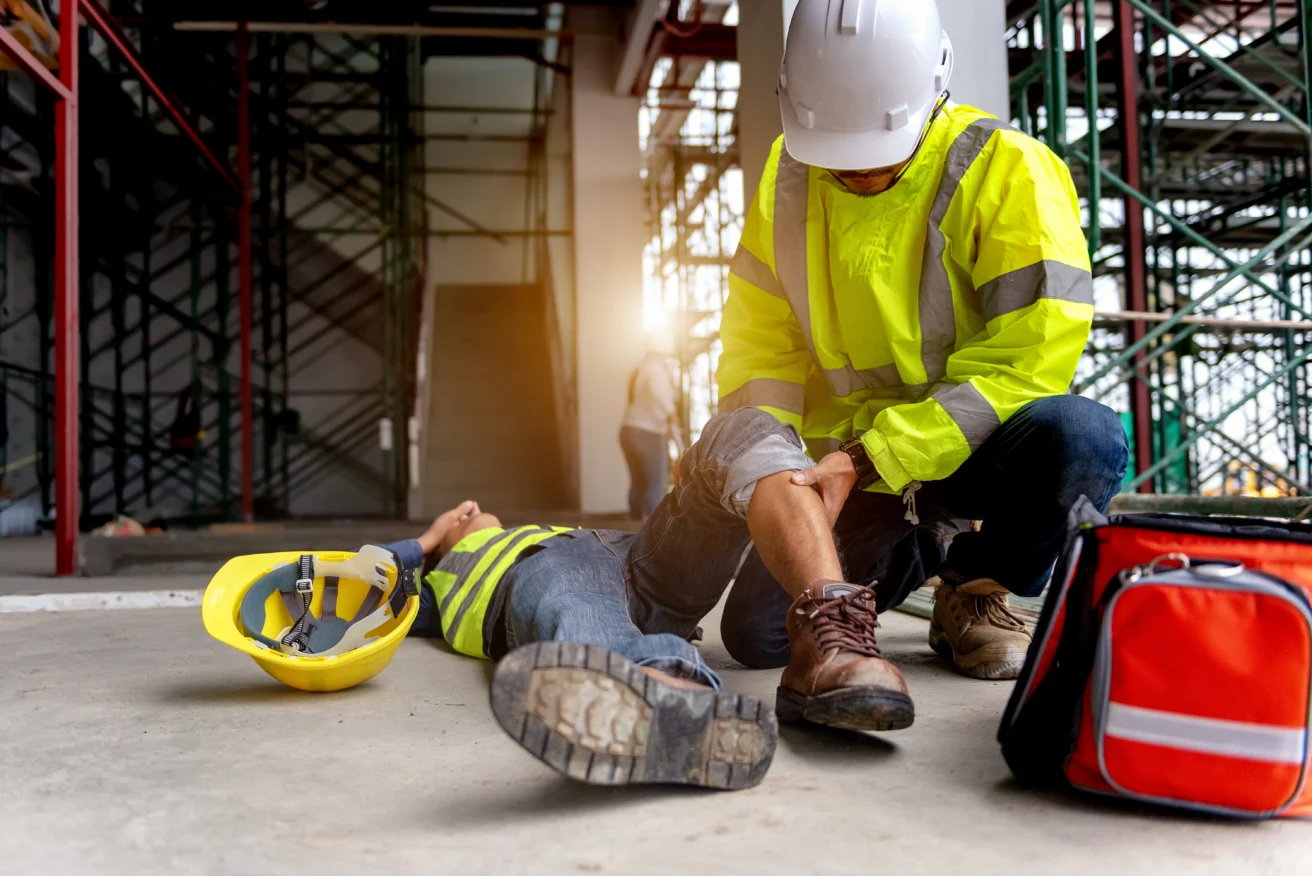
Construction jobs are high risk due to safety hazards and dangers common on job sites. Construction sites are fast-paced because multiple trades are working simultaneously, and workers face dangers that many other jobs never encounter. Understanding the common causes of construction site accidents is important for preventing injuries, maintaining regulatory compliance, and knowing what your legal options are if you’re injured on the job.
What Are the Risks of Working on a Construction Site?
The construction industry consistently ranks among the most dangerous sectors for workers. According to the Occupational Safety and Health Administration (OSHA), approximately “20% of all occupational deaths in the U.S.A. are related to the construction industry.” Here are the most common accidents on construction sites.
1. Falls
Falls are consistently ranked as the leading cause of death for construction workers, making them the single deadliest hazard on job sites. Even a fall from a relatively low height can cause severe spinal injuries or concussions.
Unprotected Edges & Openings
Unfinished structures, roofs, and scaffolding put workers at risk, especially when guardrails are missing around open edges or floor holes.
Scaffolding Failures
Scaffolding serves as a temporary framework on construction sites which provides safe access to hard-to-reach areas for workers and materials, but improper assembly or insufficient maintenance can have deadly consequences. Collapses caused by faulty planking, unstable supports, or overloading are frequently due to installation.
Incorrect Use of Ladders
Since ladders are so common on construction sites, the risks of them can be underestimated. Using an inappropriate ladder, placing it on uneven surfaces, or stretching beyond reach leads to thousands of injuries each year. Serious falls often occur when workers fail to maintain three points of contact on ladders or equipment (two hands and one foot, or two feet and one hand), which can prevent serious falls. These incidents can result in legal consequences including OSHA violations, employer liability, and workers’ compensation claims or lawsuits.
2. Struck-By Object Incidents
The risk of being hit by falling or moving objects is the second most common cause of injuries on construction sites where hazards can come from multiple directions on crowded and fast-moving job sites.
Falling Debris & Tools
Workers are at risk of being struck by objects⎯especially when crews are working on multiple levels, when safety zones are ignored, loads are improperly secured, or equipment is operated recklessly. Wearing proper protective gear such as hard hats, earplugs, coveralls, vests, safety glasses and shoes is extremely important to help prevent serious injuries and reduce liability.
Equipment & Vehicle Accidents
Construction work often involves operating or working around large vehicles like forklifts, cranes, and dump trucks. Collisions, rollovers, and accidents with moving equipment are common causes of injuries. Proper training, traffic management, and regular maintenance checks are important to prevent these incidents.
Flying Particles
High-speed particles flying from nail guns, grinders, and saws are extremely dangerous. Without proper eye and face protection, these incidents can result in permanent blindness or severe lacerations creating significant legal and liability concerns for employers.
3. Caught-in/Between Incidents
Accidents involving trench collapses, equipment rollovers, or workers pinned between objects are often deadly and can result in serious legal consequences for negligent employers.
Trench Collapses
Trenches can appear safe, but sudden trench collapse can bury a worker under thousands of pounds of soil, leaving workers with little chance to react, and the weight of the dirt can cause immediate suffocation. Most fatalities occur because proper shoring or trench boxes are not used, exposing employers to liability lawsuits and OSHA violations.
Caught-in Machinery
Loose clothing, jewelry, or long hair can easily snag in the rotating parts of machinery. The sheer force of construction machinery can pull a worker into it almost instantly, leaving little time to activate emergency controls. Many of these accidents happen during servicing when required lockout measures are not properly implemented.
Crushed Between Equipment & Structures
Crush injuries frequently occur around rotating machinery, specifically cranes. If a worker is caught between a crane’s rotating superstructure and a stationary surface, they can be fatally pinned when the crane swings, which can result in catastrophic harm and potential employer liability lawsuits.
4. Electrocution
Since electricity has no visible warning, it’s one of the most dangerous hazards on construction sites. Employers need to ensure strict OSHA mandated protections. If standards and safety oversight aren’t met and there’s a severe accident, this could cause a lawsuit against an employer.
Overhead Power Lines
Overhead power lines are a leading cause of fatal electrocutions in construction. When heavy equipment makes contact with a live wire, the electrical current can pass through the machine and into the surrounding area, putting operators and nearby workers at risk of electrocution.
Damaged Tools & Cords
Extension cords on construction sites often sustain heavy wear and tear from vehicles, mud, and rough handling. Exposed wiring due to damaged insulation creates an immediate danger, when even a second of contact, especially in wet conditions can lead to serious or fatal injuries.
5. Exposure to Hazardous Materials
Construction workers are often exposed to hazardous substances like chemicals, asbestos, and toxic fumes. Without strict adherence to safety protocols and proper protective equipment, these exposures can result in serious illness, chemical burns, and long-term respiratory disease.
6. Human Error & Fatigue
Human error is a common factor in construction accidents due to exhaustion, pressure, and lack of training. Proactive measures like fixed schedules, rotate responsibilities on the site, and ongoing safety programs can prevent accidents and minimize employer liability.
Contact Postman’s Construction Site Injury Lawyers For a Free Case Review
Have you’ve been injured on a construction site or lost a loved one due to an employer’s negligence? Postman’s construction site injury lawyers are here to protect your rights and fight for the compensation you deserve. Contact us today for a free case review by calling 844-POSTMAN or filling out our form online. We have offices in Chicago, Minneapolis, Denver, and Cincinnati, but also handle construction site injuries nationwide to hold negligent employers accountable.
Disclaimer: This blog post is for informational purposes only and does not constitute legal advice. For specific guidance regarding your situation, consult a licensed attorney.
FAQs
OSHA refers to falls, struck-by incidents, caught-in/between incidents, and electrocutions as the Fatal Four hazards.
All union employees are typically covered by state-mandated workers’ compensation programs. If you’ve been injured on the job, it’s important to talk with an injury lawyer for union workers to make sure you understand your rights and what compensation you’re entitled to.
The maximum amount you can get from a workers’ compensation settlement depends on state law, the severity of your injury, and your wages.
There isn’t an average workers’ compensation settlement amount in Ohio because it depends largely on factors like the need for surgery, the extent of permanent disability, and anticipated future medical expenses.
In Minnesota, workers’ compensation usually pays injured employees two-thirds of their average weekly wage, up to state-set maximums. These tax-free benefits cover a range of protections including medical expenses, wage replacement for temporary or permanent disability (TTD/TPD), vocational rehabilitation, and permanent partial disability (PPD).
In Illinois, workers’ compensation usually pays injured employees two-thirds of their average weekly wage for lost income, subject to state-mandated minimum and maximum weekly limits. These benefits also cover 100% of reasonable medical expenses, partial wage replacement for light-duty assignments, and compensation for permanent disabilities resulting from workplace injuries.
There isn’t an average settlement amount for Colorado workers’ comp claims since payouts vary depending on injury type, severity, and individual circumstances. Workers’ compensation settlements are calculated using an injured worker’s Average Weekly Wage (AWW) and the impairment rating assigned by an authorized treating physician.
After your initial consultation, Postman Law’s construction accident attorneys can start working on your claim immediately. Contact us for a free case evaluation.
According to a study by Penn State College of Engineering, “8 to 16% of construction fatalities involve cranes.”
Liability for a construction site injury can be complex because multiple parties may share responsibility. It depends on how the injury occurred and whether it falls under workers’ compensation or a third-party personal injury claim. If you’ve been injured on a construction site, contact a Postman Law construction accident attorney immediately to review your case and discuss your rights.

Celebrating Our First Pitch: Postman Law at the MN Twins Opening
In 2003, armed only with ambition and a U-Haul, I and a few fellow Michigan grads rolled into the Twin Cities to start our law school journey at the U. Our first memorable stop? The iconic H.H.H. Metrodome.

Comparative Fault Explained
When you’re injured in an accident—whether it’s a car crash on the Dan Ryan Expressway in Chicago or a slip-and-fall incident at a neighborhood grocery store—one of the first questions that comes up is: “Who’s at fault?” In Illinois, answering this question often involves comparative fault (also called comparative negligence).

Postman and Roden Law File Wrongful Death Suit against Lil Durk
Today, Postman Law and Roden Law filed a wrongful death lawsuit in Cook County on behalf of the family of Saviay’a Robinson. The suit targets those responsible for the tragic death of Robinson in Los Angeles.